I put my money where my mouth is for a change. I bought a bad camera. Well, not truly genuinely bad, exactly. More like just not state of the art. Because it’s a 7-year-old model. Which is surprising because it’s a camera I depend on for my work every day.
Doesn’t a working photographer need the newest best thing? Sometimes. But not all the time.
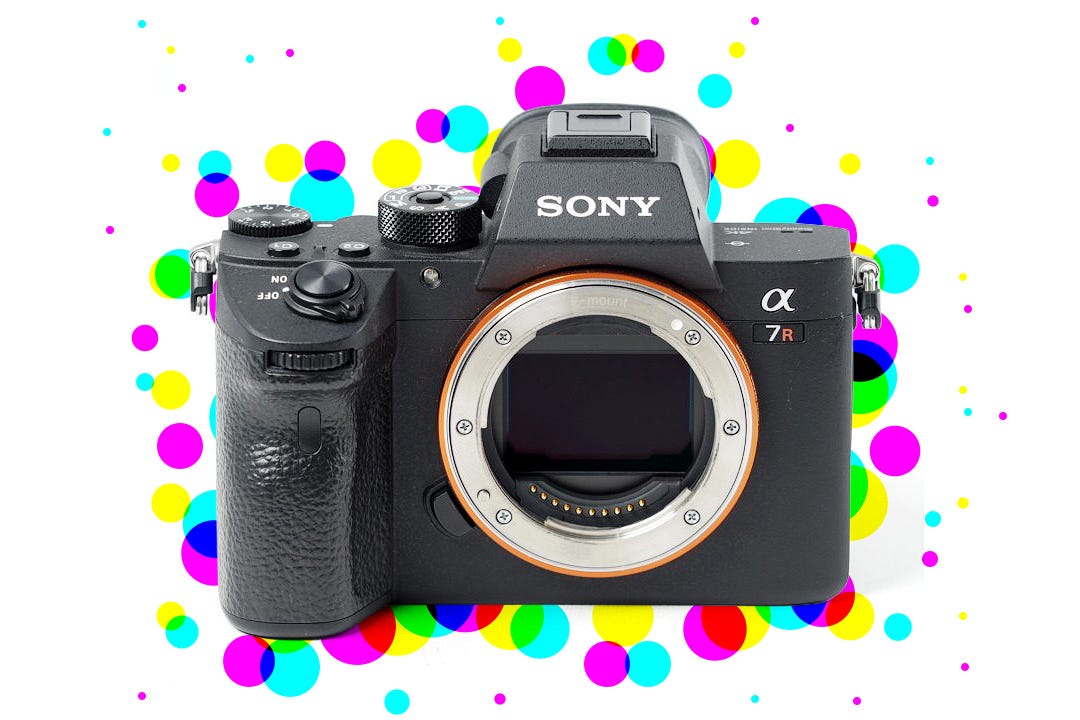
In my case, I acquired a new version — well, a used version, but new to me — of the camera I’ve been shooting primarily since 2019. It’s a Sony A7R3. And it’s a solid two generations behind the state of the art. About to be three. Ancient, by professional standards.
This one was a good deal, and that contributed to the equation. It is in mint condition, barely used in fact with only 1500-some shots on it. (For reference, I used it on a shoot last week and now it has 3,000-some shots on it. And it will replace a body with 240,000 frames on it, and usurp another with about 150,000 frames on it. That’s the one I still think of as “new” but now it’ll be the old one and the old one will be a goner.) And it cost just over $1,000.
Why would I do such a thing?
Because I love the camera. I don’t love it like people love their Leicas and Fujis and whatnot. But I love that it seems to be reliable and dependable and it performs wonderfully for what I need it to do. I don’t have to think about it and I love that, too.
Second, I don’t need more resolution, or tighter pixel pitch, or giant-er image files. In fact, I actively don’t want giant image files. I don’t need 60 megapixels. I like the idea, in theory, but I don’t need to have it in reality.1
And C, I wanted to replace an aging and inevitably ailing camera without the cascading side effects that come with big file size upgrades.
There’s only one thing this camera doesn’t do that I wish it did, and it’s not a big deal. It doesn’t have a fully articulating LCD screen. I have a recurring photo shoot that often finds me outdoors, laying on my belly or hoisting the camera high overhead. The tilting screen is helpful for this, but it falls short at certain angles. This feature would be a “nice to have,” not a “must have.”
If I was going to upgrade, I’d make it count. A medium format camera, like a Fuji GFX or a Hassy X2D. But I am not looking to make that kind of investment at the moment. I need some nice, comfortable status quo.
Plus, there’s this: if it ain’t broke don’t fix it.
Wise words. I believe them, too. So I put my money where my mouth is.
Ultimately my camera is a hammer. I need it to work, to be comfortable in my hand, to be effective at its task, to allow me the freedom to not have to worry about its capabilities. There are plenty of reasons to justify an upgrade. But not every purchase must be a game changer. Sometimes a hammer is just a hammer. Sometimes the status quo works perfectly.
In my case, that status quo still managed to be an upgrade of sorts, because I effectively reset the clock on a camera with a quarter-million shutter releases to one that is all but brand new. And, depending on how much I get for it, when I sell the old camera this mild “upgrade” will have cost something in the neighborhood of a few hundred bucks. Not bad.
In short, this camera purchase was a practical choice. And an easy one. I’m being somewhat cautious and making choices with an eye toward prudence in the current business environment. My old hammer was about to break, so I bought a new one. That’s about it.
There’s another theory about camera upgrades that makes a lot of sense even though I don’t practice it. It goes like this:
You buy a new camera, the latest and the greatest. Let’s say it costs $3,000. You use it for a couple years and the manufacturer announces its replacement. The day it comes out, it costs $3,200, and the old one is now $2,800. You can sell it for, let’s say, $2,500. If you do that and buy the new new one, you’re out $700 and you’ve got the latest, greatest camera. It’s not a bad outlay, especially when amortized. If you always buy the new thing and immediately sell the old, after the first one you’ll only pay the cost difference between the new camera and what you can sell the old one for. It’s a great way to ensure you always have the newest camera.
There’s another, even better reason for this approach: It ensures you’re never left holding the bag on outdated, obsolete hardware with such insignificant monetary value you don’t even bother to sell it. After enough time, your closet is full of once-expensive cameras that are now, effectively, doorstops. It’s frustrating to see equipment you paid thousands for garner $150 on the open market. If you want to avoid that, try the “buy new and replace immediately” approach.
I’m not smart enough to learn that lesson, however. So I’ll keep buying practically obsolete cameras until they turn into worthless doorstops. If it happens with this newest purchase… Well, at least this camera will sit nicely on the shelf, surrounded by other obsolete devices I once loved. It’ll be in good company.
Especially when you consider that the majority of my work is viewed, unfortunately, on a phone. Best case scenario is a 15-inch laptop screen. Oy.